Kitchen & Pantry
7 Clear Bins That Changed Everything
The bins worth buying match a shelf, a food, and a habit. Here are seven clear-bin types we picked, and how to choose among them.
As an Amazon Associate I earn from qualifying purchases. Links on this page go to Amazon. If you buy through them, we may earn a commission. You do not pay extra.
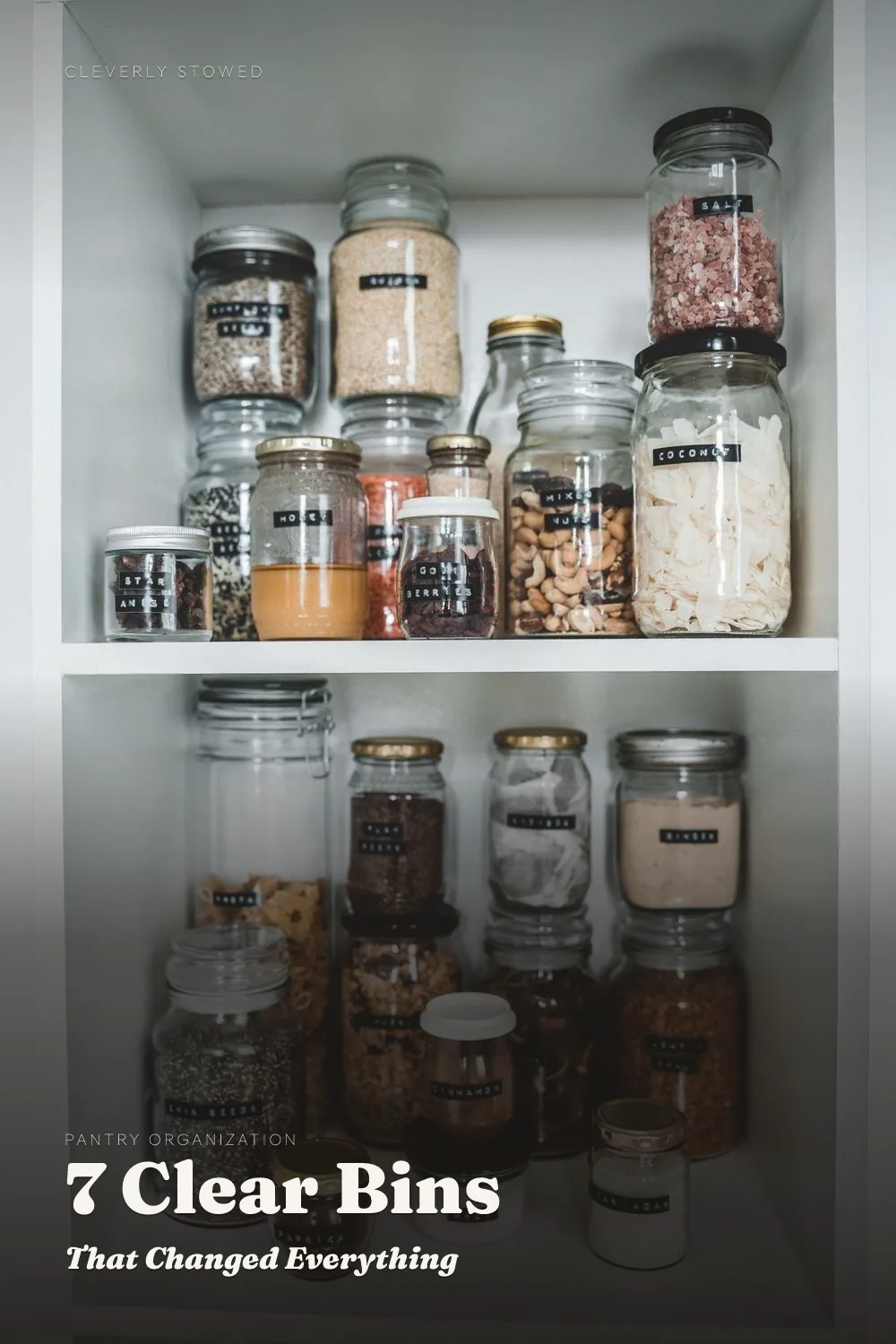
Save the photo. Current product photos and prices stay on Amazon.
Quick picks
- 1Deep snack binOn Amazon (opens in a new tab)Snack shelves · Packet mixes
- 2Tall chip binOn Amazon (opens in a new tab)Tall shelves · Bulky bags
- 3Airtight canisterOn Amazon (opens in a new tab)Flour and sugar · Humid kitchens
- 4Cereal canisterOn Amazon (opens in a new tab)Cereal · Pasta and rice
- 5TurntableOn Amazon (opens in a new tab)Oils and honey · Corner shelves
- 6Can riserOn Amazon (opens in a new tab)Canned goods · Shallow shelves
- 7Lidded backup binOn Amazon (opens in a new tab)Extra pasta · High shelves
Prices and star ratings stay on Amazon, where they stay current. Check the Amazon listing for photos of the exact item.
01
Deep clear bin for snack bags
A deep open bin corrals bags that flop over and hide. You pull one bin forward instead of excavating the shelf.
Best for Snack shelves · Packet mixes
See it on Amazon (opens in a new tab)02
Tall bin for chip bags and cereal boxes
Height is the point. A tall bin keeps oversized bags standing so the shelf above still fits.
Best for Tall shelves · Bulky bags
See it on Amazon (opens in a new tab)03
OXO POP airtight canister
A push-button seal keeps flour, sugar, and crackers from going soft. In a humid kitchen, this is the bin that matters most.
Best for Flour and sugar · Humid kitchens
See it on Amazon (opens in a new tab)04
Rubbermaid Brilliance cereal container
A wide lid and a clear body make breakfast food obvious. Pour, snap, and put it back.
Best for Cereal · Pasta and rice
See it on Amazon (opens in a new tab)05
YouCopia turntable
Corners are where jars go to expire. A turntable brings the back row forward without unloading the shelf.
Best for Oils and honey · Corner shelves
See it on Amazon (opens in a new tab)06
Tiered can organizer
Cans stop becoming a pyramid. A tier lets you read a label and take one can without a landslide.
Best for Canned goods · Shallow shelves
See it on Amazon (opens in a new tab)07
Lidded clear bin for backups
A lid keeps a backup stash from spilling when the bin lives up high or on the floor of a deep pantry.
Best for Extra pasta · High shelves
See it on Amazon (opens in a new tab)How to set it up
A clear bin earns its shelf space when it matches a food you already buy. Empty one shelf, wipe it, and look at what is actually there before you order a matching set of anything.
The seven picks above split into three jobs. Open bins hold bags and boxes you can see through the plastic. Airtight canisters hold powders and crackers. A turntable and a can riser fix the spots where food hides: corners, and the back of a canned-good row.
Measure the shelf, then the food
Use the inside of the shelf, not the pretty opening. Write down three numbers:
- Height, from the shelf surface to the underside of the shelf above, minus a finger of clearance so the bin slides out.
- Depth, from the back wall to the front lip. Many “deep” bins are deeper than a standard pantry shelf.
- Width, so two bins plus a little gap still sit side by side.
Then group the food by how you cook, not by the shape of the package. Breakfast on one shelf. Baking on another. Dinner shortcuts (broth, canned tomatoes, pasta) together. A bin of random leftovers is just a smaller junk drawer.
What to decant, and what to leave in the bag
Decant food you will refill: flour, sugar, rice, oats, the cereal you buy every week. Leave a one-time specialty ingredient in its bag. A beautiful canister of something you bought once is just a jar you have to wash.
In a humid climate, airtight matters for flour, sugar, brown sugar, and crackers. Open bins are fine for packaged snacks you will finish this month. Onions and potatoes want airflow, so skip the sealed canister for those.
A sensible first shelf
Do the breakfast shelf first. It is the one you touch every morning, so the habit sticks. Tall bin for the boxes and bags that tip. Cereal canister if you are tired of crushed liners. Deep bin for granola packets and bars.
The can riser can wait until the shelves you use daily are calm. The lidded bin is for the overflow you truly keep: a second bag of rice, backup pasta, the case of broth. Label it with the food and the year you bought the backup, in marker on tape. A label maker is optional.
Mistakes that waste the bin
- Buying the bins before you throw out what is expired. The shelf lies about how much food you have.
- Choosing one depth for every food because the set matches.
- Filling a bin so full it cannot slide past the shelf lip.
- Skipping the label because you can see through the plastic. You can see a shape. You cannot see whether it is bread flour or all-purpose once both are white powder.
Keeping it going
When a bin is empty, that is the shopping list. When a bin is a mix of three unrelated things, it is ready to be split. One more shelf is plenty for the next weekend. The under-sink cabinet is a different measuring problem, and the junk drawer is the one to do after the shelves, not before.
Related guides
Kitchen & Pantry
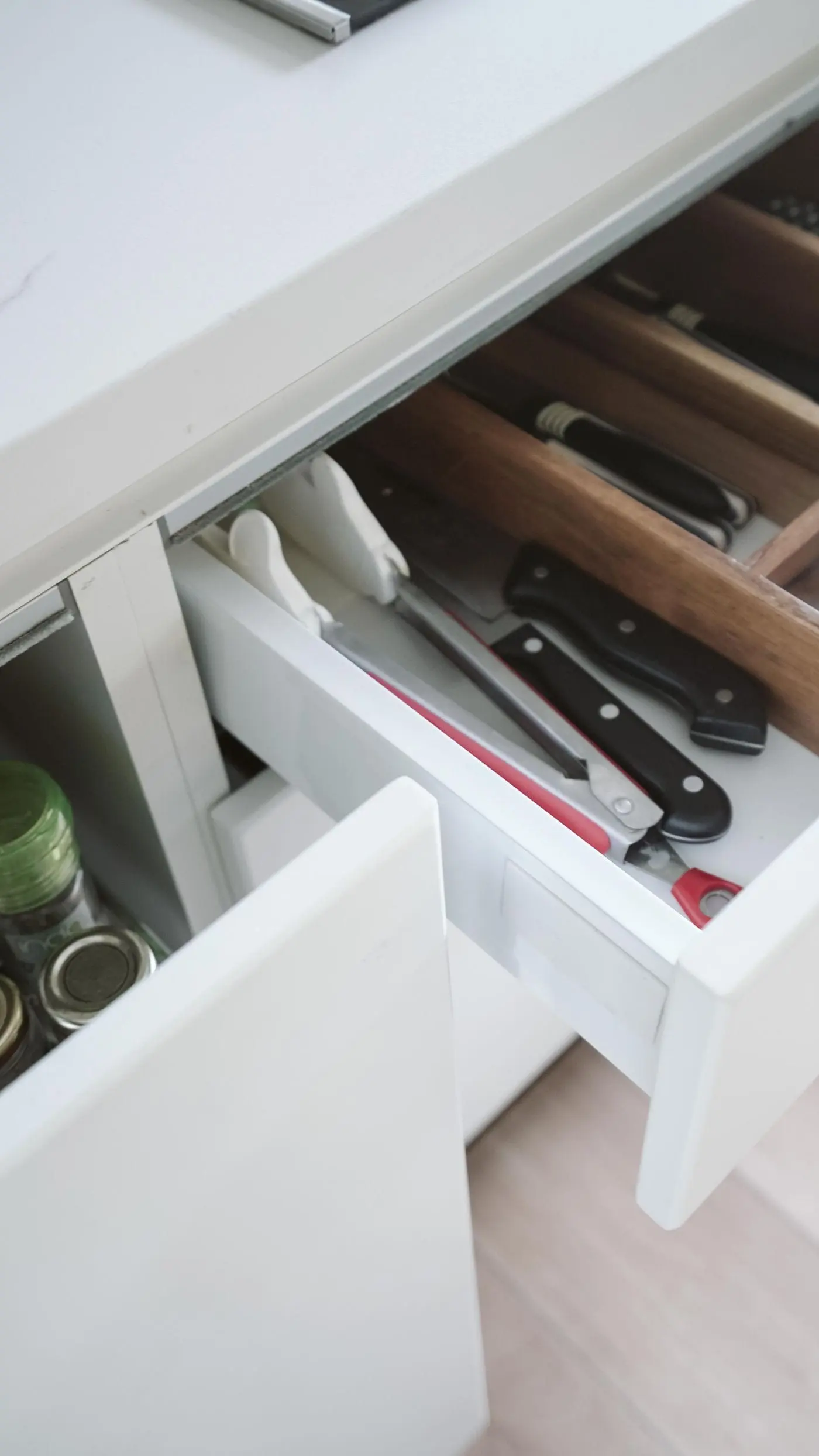
Drawer Organizers for the Kitchen Junk Drawer
Most drawers are an odd width. The organizer has to reach both sides, or everything slides behind it.
Kitchen & Pantry
5 Under-Sink Organizers That Actually Fit
The pipe decides what fits, not the photo. These five shapes cover the cabinets people actually have.

Small Spaces
Small Apartment Storage That Doesn't Eat the Room
When there is no spare closet, the storage has to be a gap you already have: under the bed, on the door, or up the wall.
Free checklist
Get our free storage checklist
A one-page list for measuring a pantry, a closet, or the cabinet under the sink before a single bin comes home. The list is written. The sign-up is not switched on yet.
Coming soon. This page does not collect email addresses.